
Lens Flare, Bloom, and Glare
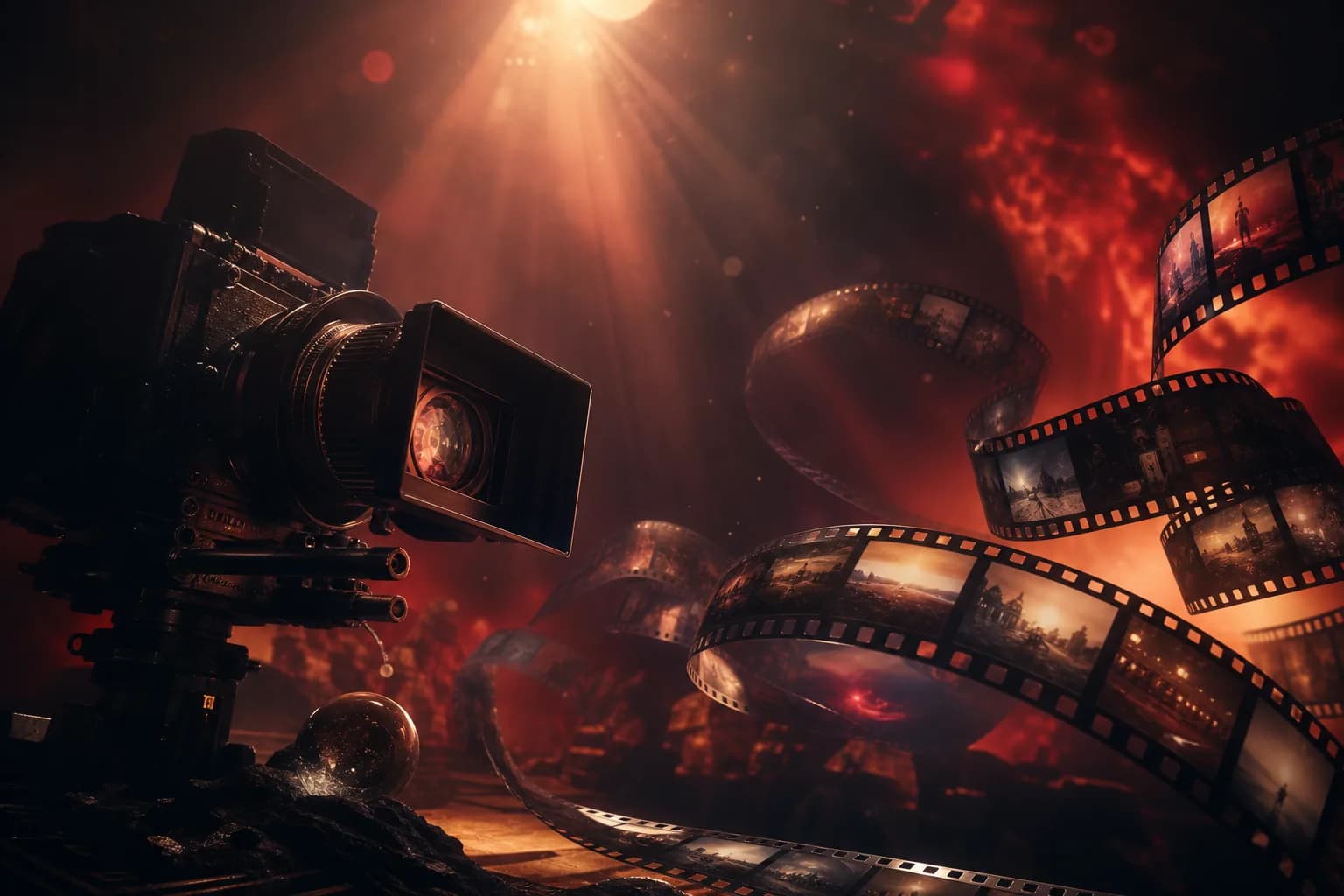
Lens flare, bloom, and glare are optical phenomena that occur when intense light sources interact with a camera lens — scattering, diffracting, and reflecting to produce visible artifacts and glow effects that reveal the physical presence of the imaging system. Far from being unwanted defects, these effects have been deliberately cultivated in cinematography to add energy, authenticity, scale, and atmosphere. From the anamorphic horizontal streak to the ethereal circular bloom of a beauty portrait, controlling these light artifacts in AI image prompts is a powerful expressive technique. This guide explains each phenomenon, its aesthetic register, and how to invoke or suppress it precisely in Floniks prompts.
What Lens Flare, Bloom, and Glare Are
Lens flare occurs when a bright light source — the sun, a strong lamp, a spotlight — enters the lens at an angle that causes internal reflections between lens elements. These reflections scatter light across the image, producing a chain of circular or polygonal artifacts (often called 'flare ghosts'), a streak of light across the frame, or a general reduction in local contrast in the area near the source. Bloom (also called halation in film) occurs when very bright highlights spread their brightness into surrounding pixels or film grain, creating a soft glowing halo around intense sources. Glare is a broader term for the loss of contrast and saturation caused by strong light entering the lens, whether or not it produces visible flare artifacts. Each has a distinct visual character and aesthetic register. Lens flare is graphic and dynamic — it draws attention to itself. Bloom is soft and atmospheric — it adds luminosity without hard-edged artifacts. Glare reduces image clarity in a diffuse way, adding a hazy, washed quality. For AI prompting, these are distinct targets: 'strong lens flare from sun at frame edge, visible flare artifacts and streak' produces the graphic flare; 'soft bloom glow around lamp sources, halation effect' produces the atmospheric bloom; 'strong glare, hazy sun flare reducing contrast in highlights, washed quality' produces the diffuse glare. Knowing which effect you want determines the prompt language.
Anamorphic Flare: The Horizontal Streak
Anamorphic lenses produce a distinctive horizontal streak of light rather than the circular or polygonal flare artifacts of spherical lenses. This horizontal streak — usually blue, cyan, or occasionally purple — runs from edge to edge of the frame whenever a bright source appears in or near the shot. It has become the most recognizable cinematic flare aesthetic, strongly associated with blockbuster cinema, science fiction, and any imagery that aims to evoke expensive, large-format production values. The streak is physically produced by the cylindrical optical elements in anamorphic lens designs, which handle horizontal and vertical light differently. In AI image prompting: 'anamorphic lens flare, horizontal streak of blue-cyan light crossing the frame from the lamp source, cinematic anamorphic quality, 2.39:1 aspect ratio, blockbuster aesthetic'. You can specify the flare color: anamorphic flares are most commonly blue or cyan, but certain lens coatings produce amber or magenta streaks. 'Warm amber anamorphic flare streak, vintage anamorphic lens quality, 1970s film aesthetic'. You can also control the streak's prominence: 'subtle anamorphic streak, gentle and not overwhelming, adds cinematic quality without dominating' or 'extreme dramatic anamorphic flare, very strong blue streak, high intensity'.
Circular and Polygonal Flare from Spherical Lenses
Spherical lenses produce a different flare character: the bright source creates a chain of circular, hexagonal, or octagonal flare artifacts that extend across the frame in a line from the light source, each one a ghostly echo produced by successive lens element reflections. The number of sides on the polygonal shapes corresponds to the number of aperture blades in the lens — a six-bladed aperture produces hexagonal flares; an eight-bladed aperture produces octagonal ones; modern circular apertures produce circular flares. These flare artifacts have their own aesthetic associations: they feel documentary, photojournalistic, and real — the mark of a camera in a practical location with unavoidable light coming from the wrong direction. They are also used in photography apps and filters as a signal of 'authenticity' and 'natural shooting conditions'. For AI prompting: 'sun flare, hexagonal lens artifacts in a chain across the sky, authentic outdoor photography, solar flare ghosts, photojournalistic quality'. For a more artistic circular flare: 'circular lens flare from the practical lamp, golden ring of light around the lamp source, ethereal and warm, portrait lifestyle photography'. For a dramatic sci-fi or action interpretation: 'multiple polygonal flare ghosts, dramatic solar flare across the frame, action cinematography energy, visible sun at upper right'.
Bloom and Halation: Soft Glow and Warmth
Bloom and halation produce softer, more atmospheric light effects than hard flare artifacts. Halation is a film photographic phenomenon where very bright highlights spread their exposure into surrounding areas of the film emulsion, creating a soft warm glow that bleeds outward from the brightest zones — particularly around windows, lamps, and skin highlights. It is associated with the analogue warmth and luminosity of film photography and is a key component of what many photographers describe as the 'filmic' look. Digital sensors do not naturally produce halation, which is why it is a sought-after aesthetic in film emulation presets. Bloom is the digital equivalent — a software simulation of the spreading of bright highlights. For AI prompting: 'filmic halation, bright highlights bleeding softly into surrounding areas, warm glow spreading from lamp sources and window light, analogue film quality'. For beauty photography: 'soft bloom effect on skin highlights, gentle spreading glow in the brightest areas of the face, dreamlike and luminous, beauty editorial quality'. For vintage film: 'film halation, red-orange glow spreading from bright highlights, vintage 35mm character, slightly soft and luminous'. These effects work particularly well for romantic, ethereal, or nostalgic imagery, and they combine beautifully with warm color temperatures to amplify a sense of warmth and dreamlike quality.
Glare, Contrast Loss, and the 'Into the Sun' Look
When a camera points toward or near a bright light source without flare being the primary effect, the result is often a diffuse glare — a general washing out of contrast and saturation in the area near the source. Shooting into the sun creates a broad zone of reduced contrast and slightly washed colors, with the shadow side of subjects becoming bright and slightly hazy rather than dark and crisp. This 'into the sun' or contre-jour look is atmospheric and dreamy, associated with outdoor portrait photography, travel imagery, and the visual language of summer, freedom, and nostalgia. For AI prompting: 'contre-jour lighting, shooting into the low sun, lens glare washing the highlights, reduced contrast, subjects backlit with warm halo, summer dreamy quality, slightly hazy exposure'. For a more extreme version: 'extreme sun glare, shooting directly into the sun, massive overexposed zone around the source, subjects as warm-edged silhouettes, atmospheric summer haze'. For a subtler approach: 'gentle sun glare, low sun just outside the frame, contrast reduced in the bright corner, dreamy lens quality, authentic outdoor photography'. In AI video on Floniks, this 'into the sun' look is particularly effective for movement sequences where the camera sweeps past a bright source, creating a dynamic flare event during the motion.
When to Use and When to Suppress These Effects
Knowing when not to use lens flare is as important as knowing how to prompt for it. Product photography almost always benefits from the suppression of flare — a product shot with an intrusive flare across the subject obscures detail and feels unprofessional. Architectural photography similarly tends to want clean, flare-free rendering. Clinical, scientific, or documentary imagery values technical accuracy over expressive atmosphere. To suppress flare and bloom explicitly in prompts: 'clean optical rendering, no lens flare, no bloom, technically correct exposure, no optical artifacts'. Conversely, the genres where flare and bloom are most powerfully deployed include: cinematic narrative and film (anamorphic and spherical flare as production quality signal); golden-hour and outdoor portrait photography (sun flare and contre-jour glow); beauty and fashion (bloom for skin luminosity); sci-fi and fantasy (dramatic flare from futuristic light sources); and action and sports (dynamic flare during motion). In Floniks /editor multi-step workflows, you can use a dedicated post-processing node to add lens flare effects as a layer on top of a cleanly generated image, giving you the clean base generation plus the expressive flare effect as separate controllable elements. Prompt templates: Suppressed: 'no lens flare, clean optical rendering, sharp and clear'. Anamorphic cinema: 'strong anamorphic horizontal blue streak from key light, cinematic blockbuster quality'. Beauty bloom: 'soft bloom on skin highlights, luminous filmic glow, dreamy beauty'. Documentary flare: 'natural solar flare artifacts, outdoor photojournalistic quality'.
FAQ
How do I get an anamorphic flare without specifying the whole anamorphic lens setup?+
'Anamorphic lens flare' or 'horizontal blue anamorphic streak' as a standalone phrase is sufficient for most capable models — they associate the term directly with the horizontal blue streak characteristic. You can reinforce it by adding 'cinematic anamorphic quality' and specifying a bright in-frame or near-frame light source for the streak to emanate from, such as 'sun at left edge of frame, anamorphic blue streak across the shot'. You do not need to describe the optical mechanism.
Can I specify exactly where in the frame a lens flare appears?+
Yes. Place the light source (sun, lamp, spotlight) at a specific position in your prompt: 'sun at upper-left corner' will produce flare artifacts extending from that corner inward. 'Practical lamp at the right edge of frame, flare extending left across the image' positions both the source and the direction of the flare chain. The further the source is toward the edge of the frame, the longer and more dramatic the flare artifacts tend to be.
Related guides
Build it on Floniks
Image, video, digital humans, and reusable workflows on one canvas. No card required.
Explore Floniks