
Prompting Home-Decor Objects
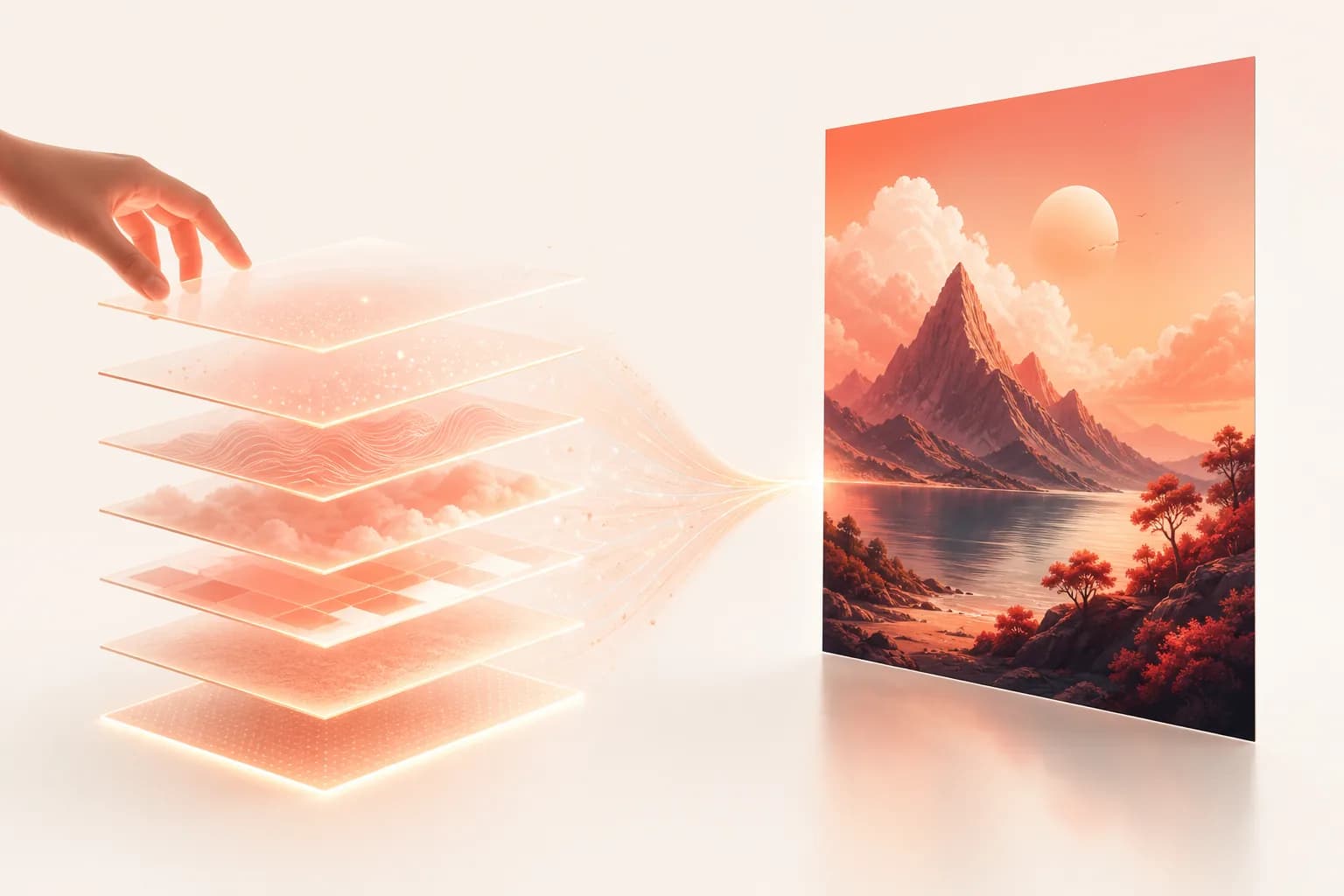
Home-decor objects span ceramics, glassware, woven textiles, metal sculptures, wooden decorative items, and mixed-media art objects — each demanding a different material vocabulary to prompt convincingly. The challenge is communicating both the intrinsic material quality of each object and the styled environmental context that makes home-decor imagery feel aspirational and commercially effective. This guide breaks down the prompt architecture for the major home-decor material categories, explains how to compose and style a vignette scene, covers the lighting language that makes warm domestic imagery, and shows how to scale consistent styled scenes across a home-decor product catalog using Floniks workflow batching.
Material Vocabulary for Ceramics and Stoneware
Ceramics are the backbone of home-decor product photography, and the vocabulary for ceramic finishes is remarkably specific. Without this vocabulary, AI models produce objects that look like smooth painted plastic rather than fired clay. The key physical characteristics to describe are: clay body color and texture, glaze type and coverage, surface irregularity, and any decorative elements applied before or after firing. For reactive glaze ceramics: 'hand-thrown stoneware vase, warm terracotta clay body visible at the unglazed foot ring, a reactive tenmoku-style glaze over the upper two-thirds of the vessel body, the glaze pooling to a dark rust-brown at the lower edge of its coverage and breaking to silver-blue highlights at the rim and shoulder where the glaze is thinner, the overall surface showing the characteristic mottling and flow of a reduction-fired reactive glaze, no two square centimeters of the surface identical.' For matte speckled stoneware: 'matte speckle stoneware mug, the exterior surface in a warm off-white matte glaze with evenly distributed dark brown iron speckles from iron oxide inclusions in the clay, the speckles roughly 1mm in diameter and randomly distributed, the matte surface completely non-reflective — diffuse light scatter only — no specular highlights on any curved surface, the rim left with a slightly thicker glaze bead.' For textured ceramics: 'hand-built ceramic bowl with a deeply textured exterior, the clay surface showing paddle marks and coil construction lines from the building process, an ash glaze applied thinly over the texture allowing the texture to remain visually dominant, the ash glaze in a pale translucent celadon green that is thicker and more opaque in the recesses of the texture and nearly transparent on the raised ridges.' For white porcelain: 'translucent bone china cup, the walls thin enough that light passes through them when backlit, the surface in a bright white glossy glaze of absolute perfection — no pinholes, no brush marks, no surface variation — a pure specular highlight from overhead studio light reflecting as a single crisp oval on the curved side of the cup, the rim showing the characteristic thinness of high-quality bone china.'
Glassware and Decorative Glass Objects
Decorative glass objects — vases, bowls, candleholders, sculptures — share some prompt vocabulary with fragrance bottles but require a different emphasis because they are typically not closed vessels and their interior negative space is often as important as the glass itself. For mouth-blown art glass: 'mouth-blown art glass vase in a deep cobalt blue, the glass walls approximately 8mm thick at the base tapering to 4mm at the rim, slight irregularity in the wall thickness producing gentle undulation in the surface profile that is characteristic of hand-blown work, small air bubbles trapped in the glass body visible as tiny spherical inclusions catching light, the interior of the vase a darker cobalt shadow contrasting with the bright blue exterior walls catching studio light.' For cut crystal: 'clear lead crystal bowl with a deep diamond-cut pattern covering the entire exterior surface, each diamond facet approximately 8mm across at the widest point, the cut edges sharp and precise, each facet catching and redirecting light in a different direction — some facets blazing white with direct light, others showing a cool blue-grey as they face away from the light source, the ensemble of cuts creating a complex sparkle pattern across the entire bowl surface.' For frosted glass: 'sandblasted frosted glass candleholder, the exterior surface a smooth but completely matte and opaque white frost, the interior of the holder visible as a warm glow through the translucent frosted walls when the candle inside is lit, the frosted surface scattering the candlelight into a diffuse even luminosity rather than the sharp transmission of clear glass.' For colored art glass: 'amber art glass sculpture on a marble shelf, the amber glass transmitting warm yellow-orange light from the window behind it, the warm light creating a pool of amber-colored illumination on the marble surface in front of the glass, the glass sculpture's interior showing depth and variation as the light refracts through its three-dimensional form.'
Woven Textiles and Soft Furnishing Objects
Woven textiles as decorative objects — wall hangings, basket work, woven placemats, macrame pieces, embroidered cushions — require fiber-level description to avoid the flat printed-fabric appearance that AI models default to. For a hand-woven wall hanging: 'hand-woven wall hanging in natural undyed wool, hung from a polished brass dowel against a white plaster wall, the weave construction visible as individual warp and weft threads at macro scale, a mixture of tabby weave and rya knot pile sections creating both flat geometric pattern areas and shaggy raised pile areas, the natural wool showing slight color variation from cream to warm oatmeal within individual skeins, the bottom edge finished with a fringe of warp thread ends approximately 8cm long and slightly knotted.' For a woven rattan basket: 'hand-woven rattan storage basket, the rattan strands approximately 8mm wide, woven in a regular over-under basket weave, the natural rattan color varying from pale cream to warm honey, the basket sides tapering slightly inward toward the top rim, the rim finished with a tightly wrapped continuous strand of rattan creating a reinforced edge, the base flat and stable.' For a macrame plant hanger: 'macrame plant hanger in unbleached natural cotton rope of approximately 5mm diameter, the rope made from a twisted three-strand construction visible at close range, the macrame knot pattern consisting of spiral half-hitch columns in the upper section transitioning to square knot groupings in the mid section, the lower section opening into a gathered fringe of approximately 20cm of loose rope ends, the whole piece hanging from a single loop with a small wooden bead at the junction point.' For an embroidered cushion: 'linen cushion cover with hand-embroidered botanical motif in satin stitch, the embroidery thread in three shades of terracotta with off-white details, the satin stitch showing parallel thread rows covering the entire filled areas of the motif, each row of stitching catching the light at a different angle creating subtle sheen variation within the embroidered zone, the surrounding natural linen weave texture clearly distinct from the smooth embroidery surface.'
Composing a Styled Vignette Scene
Home-decor imagery almost never shows single objects in isolation. The commercial standard is the styled vignette — a curated arrangement of 3 to 7 complementary objects that together suggest a lifestyle aspiration. Prompting a vignette requires describing the hero object, the supporting objects, their spatial arrangement, the surface they sit on, and the background behind them. A well-constructed vignette prompt: 'styled home decor vignette on a white oak shelf bracket against a linen-textured white wall. Hero object: a hand-thrown terracotta vase approximately 25cm tall holding three dried pampas grass stems at varying heights. Supporting objects: a small stack of three design-format hardcover books with neutral color spines placed beside and slightly in front of the vase, a small tumbled travertine object acting as a bookend on the right side, a single taper candle in a simple brass holder at the far left of the composition, a small textured ceramic dish at the front of the arrangement holding two smooth river stones. The arrangement occupies approximately 60cm of shelf width, the objects varying in height from 5cm (dish) to 70cm (tallest pampas stem). Natural light from the left casting soft shadows of the pampas plumes across the wall behind. The overall aesthetic: Japandi-influenced neutral organic materiality, warm tones, no saturated colors.' This level of spatial and material specificity is what separates a convincing editorial home-decor image from a collection of floating objects against a background. The vertical rhythm of the objects (low to high, varying heights), the layering of front-to-back depth, the light direction, and the style label all work together to produce a coherent scene.
Lighting Language for Warm Domestic Imagery
Home-decor photography aims for a lighting quality that feels aspirational but domestic — not the clinical precision of a commercial studio, but not the messiness of uncontrolled household light either. The most effective prompt lighting descriptors for home-decor work draw on natural light metaphors. For window light: 'soft directional window light from the left, the light source implied but not visible, warm daylight color temperature approximately 5200K, the light falling across the arrangement at a 45-degree angle casting soft-edged shadows of each object onto the surface and wall behind, the shadow penumbras (the soft gradients at the shadow edges) approximately 3cm wide suggesting a diffuse window with gauze curtain rather than direct sun.' For the golden hour register: 'warm late-afternoon light raking across the shelf from the right at a low angle, the warm amber quality of 5000K daylight filtered through a thin curtain, the light striking the side-facing surfaces of the objects and creating long soft shadow behind each piece, the overall scene tonality warm and golden without looking over-saturated.' For a moody dark-surface setup: 'the arrangement on a dark walnut surface, a single softbox from directly above and slightly in front, the light falling vertically onto the top surfaces of the objects and the shelf surface, creating a pool of light in the center of the arrangement with the edges of the shelf fading into shadow, the wall behind the arrangement approximately one stop darker than the main arrangement, a rich and moody chiaroscuro lighting quality.' For pure lifestyle brightness: 'high-key Scandinavian-style bright airy room light, overall high ambient white light from a large north-facing window, no directional shadows, every surface evenly illuminated, the objects reading as bright and clean against the white shelf and wall, the overall tone pure bright white and warm natural wood.'
Batching Home-Decor Catalog Images in Floniks
A home-decor brand selling 40 different ceramic vessels needs product images at two levels: clean white-background pack shots for e-commerce listings, and styled vignette shots for editorial and social media. These are two different visual treatments of the same 40 objects. In the Floniks workflow editor, each treatment is encoded as a separate branch node. The shared product information (clay body material, glaze type and color, dimensions, surface texture) goes into a shared product node for each SKU. Two branches extend from each product node: one to a white-background e-commerce photography context node, the other to a lifestyle vignette composition node that selects appropriate complementary objects from a curated object library. All 40 SKUs run through both branches in a single workflow execution, producing 80 images — 40 pack shots and 40 lifestyle shots — in parallel. The styled vignette branch includes a style preference node that can be set to 'Japandi neutral,' 'Mediterranean warm,' or 'Maximalist eclectic' as a single parameter that shifts the complementary object selection and background material across all 40 vignette images simultaneously. This makes seasonal art-direction changes trivially easy: switching from summer rattan-and-linen styling to winter wool-and-brass styling requires updating one style preference node rather than 40 individual prompts. For new product launches, the shared product node is the only element that needs to change — the entire dual-format production pipeline is already configured and ready to run.
Related guides
Build it on Floniks
Image, video, digital humans, and reusable workflows on one canvas. No card required.
Explore Floniks