
Prompting Minimal Product Scenes
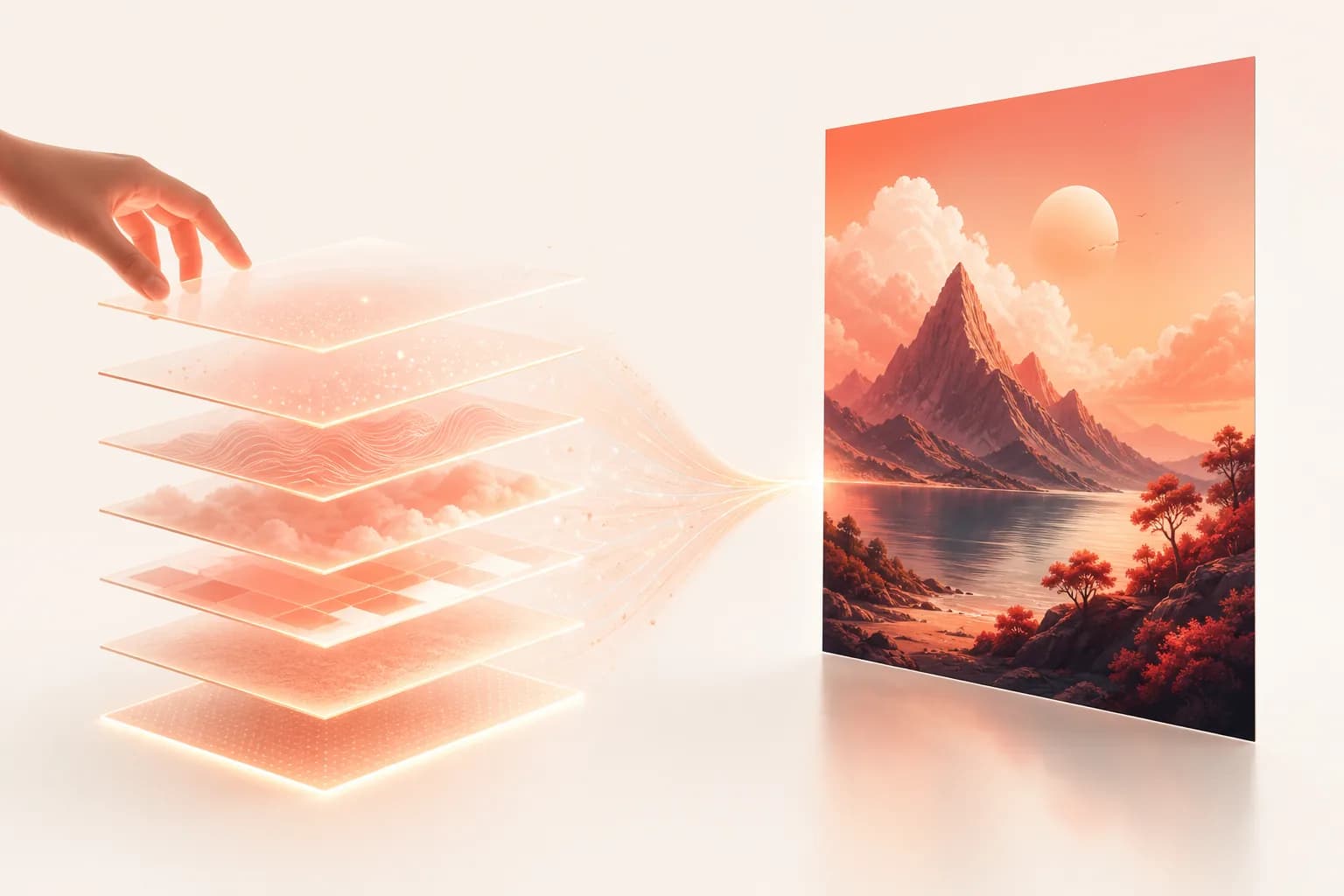
Minimal product scenes — where one or two objects occupy a carefully controlled environment with generous negative space — are among the most powerful and most difficult images to execute well. The visual tension in minimalism comes from what is deliberately left out, and AI models trained on complex scene data tend to fill negative space with unintended details, clutter the composition, or render the background with inappropriate texture rather than the clean neutrality minimalism requires. This guide teaches you to prompt and hold the emptiness: controlling negative space, shadow geometry, product isolation, surface finish, and color temperature to generate genuinely minimal product imagery that communicates premium restraint.
The Paradox of Prompting Minimalism
Minimalism presents a fundamental prompting paradox: the visual style is defined by what is absent, but AI models generate by adding. Every token in your prompt can become a visual element in the output, and without careful management, even a minimal-intent prompt generates cluttered results because the model is rewarded during training for producing rich, detailed, complex images. To counteract this tendency, a minimal product prompt must explicitly instruct the model on the content of the empty space — not just what the image contains, but what it deliberately does not contain. Begin every minimal product prompt with a clear statement of the empty space: 'single product object, white seamless background curving to white floor, no other objects, no props, no texture variation in the background, pure color-field negative space.' Reinforce this with negative constraints at the end of the prompt: 'no decorative elements, no secondary objects, no patterned background, no environmental context.' The phrase 'no texture variation in the background' is particularly important — models tend to introduce subtle gradient, grain, or paper texture into what should be a completely flat color plane, and this breaks the purity of the minimal aesthetic. For absolute white backgrounds, specify the level: 'pure #FFFFFF white background, not ivory, not cream, not warm white, not textured, a completely neutral empty white field.' For other minimal background colors — soft grey, dusty sage, warm blush — specify in the same way: 'flat cool light grey background, no texture, no variation, even tone throughout, the visual equivalent of a painted cyclorama wall.'
Shadow Geometry as Compositional Element
In a minimal scene with almost no other visual content, the shadow cast by the product becomes one of the most important compositional elements in the image. Shadow controls the visual weight of the product, communicates the lighting setup, and provides the grounding element that prevents the product from looking like it is floating arbitrarily in empty space. Different shadow types serve different minimal aesthetics. The drop shadow — directly below the product, no perspective — is the most common and most neutral: 'drop shadow directly beneath the product, soft-edged, slight transparency, fading at the edges, shadow oriented directly below with no diagonal direction.' The perspective shadow — projecting to one side at an angle — adds a time-of-day quality and creates a diagonal compositional element: 'long perspective shadow projecting to the left of the product at a shallow angle suggesting a low sun position, shadow distinctly longer than the product height, soft edge.' The hard architectural shadow — sharp-edged, geometric — communicates a studio environment with a hard light source and creates a bold graphic quality appropriate for fashion and tech products: 'hard-edged shadow with no softening at the edge, sharp geometric projection of the product silhouette onto the white floor plane, strong contrast, midday sun metaphor.' Specifying shadow opacity is important: 'light transparent shadow at approximately 20% opacity' versus 'strong opaque shadow at 70% opacity, dark and prominent.' In some minimal compositions, eliminating the shadow entirely creates a floating, almost surreal effect: 'product with no shadow, appearing to float in the white background space, slightly aspirational unreality.'
Surface Finish and the Language of Clean Materials
The surface the product rests on in a minimal scene is not just a platform — it is a second material in the composition, and its finish determines how much visual texture and information the lower half of the image contains. High-gloss white surfaces create a mirror reflection: 'high-gloss white acrylic surface, perfect mirror reflection of the product visible below the product, reflection slightly compressed vertically, reflection clarity reducing away from the product base.' This reflection doubles the product and adds a vertical symmetry that is particularly effective for perfume bottles, tech objects, and geometric products. Matte white surfaces absorb rather than reflect: 'matte white paper surface, no reflection, soft shadow absorption, the surface texture slightly visible as a fine grain at close inspection but reading as clean and even from a distance.' Soft fabric surfaces add tactile warmth to minimal scenes: 'smooth white fabric surface, slight weave texture visible in macro, surface undulates very subtly with the weight of the product, no reflectivity, warm and tactile surface quality.' Stone surfaces — white marble, pale limestone — add luxury register even to simple compositions: 'white Carrara marble surface, fine grey veining visible, polished to a mid-gloss, product casting a soft reflection in the marble polish.' For a truly minimal scene, the surface should have a single dominant quality that is compatible with the product's material character. A matte clay vase on high-gloss acrylic creates a material tension that breaks the harmony; the same vase on rough white linen creates material consonance that reinforces the handmade quality of the piece.
Lighting for Minimum: One Source, Maximum Control
Minimal product scenes typically use a single dominant light source precisely controlled in direction and quality — the opposite of the multi-light setups used for complex scenes where multiple sources fill shadows and eliminate variation. Single-source lighting in a minimal scene creates a clear hierarchy of light and shadow that gives the product its three-dimensional form in the absence of any environmental context. The most common minimal product lighting is a single overhead soft-box at slight forward angle: 'single overhead soft-box, positioned at 15 degrees forward of vertical, even illumination across the top surface of the product, soft shadow falling slightly behind and below, minimal fill, clean simple light.' Side lighting creates stronger shadow and more dramatic form definition: 'single left key light, product lit from 45 degrees left horizontal, right side of product in shadow graduating from mid-tone at the terminator to near-black at the right edge, no fill light.' For products where label readability matters, front lighting is necessary but must avoid flatness: 'front soft-box slightly above horizontal, product label fully lit and readable, slight shadow under the cap and base suggesting lighting direction, not completely flat.' Color temperature of the single light source sets the entire tonal mood of a minimal scene: 'cool 6000K daylight color temperature, clinical and precise,' versus 'warm 3200K tungsten color temperature, luxurious and warm.' In the absence of all other contextual information, color temperature becomes the primary atmosphere carrier. Choose it to match the brand register of the product: clinical products benefit from cool light; artisanal and luxury products from warm.
Composition Principles for Single Product Isolation
With a single product occupying an otherwise empty frame, composition reduces to decisions about scale, placement, and negative space distribution — each of which communicates a different brand message. The product's scale within the frame is the first decision: a product that fills 80% of the frame communicates confidence and dominance; a product that occupies only 20% of the frame communicates exclusivity and allows the emptiness to convey premium restraint. For luxury and prestige products, small-in-frame with generous empty space is the right direction: 'product occupying approximately 25% of the frame area, centered, surrounded by generous negative space, product small relative to the surrounding emptiness, premium restraint aesthetic.' For e-commerce where product detail must be visible and legible: 'product filling 70% of frame width, dominant scale, every detail visible, no margin wasted on empty space, commercial product page optimization.' Product placement off-center using the rule-of-thirds adds dynamism: 'product placed at left one-third of frame, negative space on the right two-thirds, asymmetric composition, shadow projecting right into the empty space.' Vertical versus horizontal framing matters: tall narrow products (perfume bottles, candles, wine bottles) benefit from portrait orientation where the full height is visible; flat or wide products (books, watches, compact electronics) from landscape. Specify orientation in the prompt: 'portrait orientation frame, product's full height visible, centered horizontally, more negative space above the product than below creating a floating uplift effect.'
Color Palette Decisions in Minimal Scenes
In a scene with deliberately minimal content, the color palette of the background and surface is not a neutral decision — it is the dominant aesthetic statement. The choice between pure white, warm cream, cool grey, soft blush, and dusty sage as a background communicates a very specific brand register that the product must either harmonize with or intentionally contrast against. Pure white is the most neutral and most versatile: it communicates clinical precision, Scandinavian modernism, or simply the absence of brand personality — a blank context that puts all attention on the product itself. Use it when the product design is strong enough to carry the entire image. Warm cream and ivory signal 'natural,' 'organic,' 'artisanal': 'warm ivory background, slight warmth in the color, the visual language of natural paper and linen, matching well with skincare, food, and wellness products.' Cool grey signals technology and modernity: 'cool neutral grey background, approximately 20% value, clean and minimal, technology product register.' Soft blush and dusty rose signal contemporary lifestyle and beauty: 'soft dusty blush background, desaturated pink-beige, contemporary lifestyle photography register, feminine product aesthetic.' Forest green and deep navy signal luxury and premium outdoor: 'deep forest sage green background, desaturated and muted rather than vivid, luxury outdoors and wellness register.' Beyond the background, consider the color relationship between background and product: a harmonious palette where the product and background are adjacent colors on the wheel creates quiet elegance; a contrasting palette where they are opposite creates graphic pop. Specify the desired relationship: 'background color chosen to provide slight warm-cool contrast with the cool packaging of the product, background at a warmer tone than the packaging for vibration and visual interest.'
Step by step
- 1
Open with a statement of what the empty space contains
State the background content explicitly at the start: 'single product, white seamless background, no other objects, no props, no texture variation.' AI models add by default; your prompt must instruct the model on the positive content of the empty space to prevent unintended filling.
- 2
Specify shadow type and opacity as compositional decisions
Choose a shadow type (drop shadow, perspective shadow, architectural shadow, or no shadow) and state its opacity level. In a minimal scene with no other compositional elements, the shadow is often the second most important visual element after the product itself.
- 3
Match background color temperature to product register
Select a background color that reinforces the product's brand register: pure white for clinical precision, warm cream for natural or artisanal products, cool grey for technology, soft blush for contemporary lifestyle. State the color in descriptive terms and specify what it is not (not ivory, not warm white) to prevent tonal drift.
FAQ
Why does my AI minimal product scene always have unintended texture or gradient in the background?+
Background texture creep is a common problem because models tend to add subtle detail to large empty areas. Add explicit constraints: 'no texture variation in the background,' 'flat even color throughout,' 'no gradient,' and 'no grain.' For extra enforcement, specify the color as a neutral noun description: 'flat color field, the visual equivalent of a painted studio cyclorama.'
Should I use the same minimal background for all products in a range?+
Yes for catalog consistency; selectively varied for editorial and campaign use. Build a background specification node in Floniks' workflow editor and connect it to all product nodes in a catalog run. For campaign imagery where different hero products need different emotional registers, vary the background color per product category while keeping all other variables (lighting, shadow, surface) identical.
Related guides
Build it on Floniks
Image, video, digital humans, and reusable workflows on one canvas. No card required.
Explore Floniks