
Describing Texture and Material So Surfaces Look Real
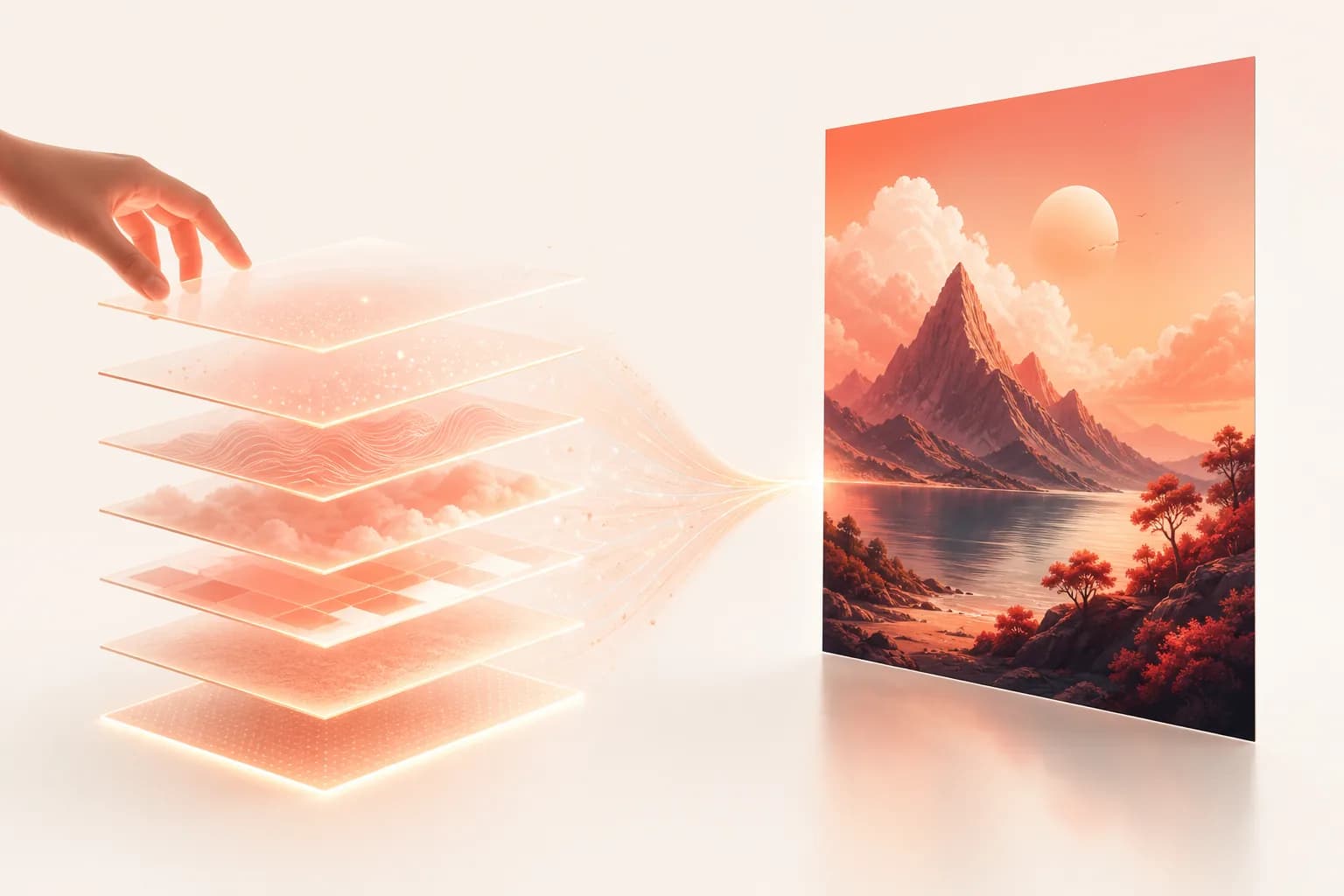
Texture and material description is the prompt layer that separates a convincing AI image from one that looks obviously synthetic. Models distinguish between surface types when prompts name them precisely: brushed aluminum reflects light differently from polished chrome, and woven linen reads completely differently from silk. This guide covers how to describe material properties — reflectivity, surface finish, grain, weave, and translucency — using language AI image models respond to reliably. It includes a reference vocabulary by material category (metals, textiles, stone, ceramic, glass, organics) and shows how pairing material descriptions with the right lighting conditions produces the most photorealistic surface rendering in Floniks.
Why material description matters for photorealism
The brain processes surface material information in an instant — it is one of the most deeply trained pattern-recognition systems humans have, because knowing whether a surface is hot, sharp, soft, or wet is survival-critical. AI viewers (and human viewers of AI images) apply the same sensitivity. A piece of fabric that does not drape and fold with the weight characteristics of its named material looks fake; metal that does not reflect light with the sharpness or diffusion appropriate to its finish looks painted on. This is why generic prompts like "a table with a mug" produce surfaces that look plausible from a distance but synthetic on close inspection — the model defaulted to average material rendering. The fix is naming the specific material and its key optical properties. "A ceramic mug with a matte, slightly rough stoneware glaze" produces a completely different surface rendering than "a glazed porcelain mug with a high-gloss finish." Both are ceramic mugs. The material descriptor is what makes one look like something from a handcraft pottery studio and the other like a hotel lobby amenity. On Floniks /ai-image, adding a dedicated material/texture segment to your prompt typically produces an immediately visible quality improvement in surface realism without requiring any parameter changes.
Metals: reflectivity and finish vocabulary
Metal surfaces vary across a wide range of reflective behaviors, and naming the specific behavior is essential. Polished/mirror metals (chrome, mirror-polished steel, gold, silver): "mirror-polished chrome surface, specular highlights, crisp reflections of environment, no diffusion." These surfaces reflect the environment as a near-perfect mirror — the key optical quality is the sharpness of the reflections. Brushed metals (brushed stainless steel, satin gold, brushed aluminum): "brushed stainless steel, directional matte sheen, soft elongated specular highlight, subtle grain in one direction." Brushed surfaces scatter light along the brush direction, producing a soft linear sheen rather than a sharp reflection. Oxidized and patinated metals (aged copper, rust, verdigris): "aged copper with green verdigris patina, pitted surface texture, matte oxidized finish, no shine." Anodized metals (matte aluminum, titanium): "anodized titanium, matte surface, slight iridescence in raking light, no strong reflections, subtle color shift from gunmetal to dark bronze at different angles." For product photography in Floniks, combining the metal finish description with a specific lighting note — "raking side-light that catches the brushed texture" for brushed metals, "overhead point light for a mirror-like specular highlight" for polished metals — produces the most convincing results.
Textiles: weave, drape, and surface quality
Textile description requires naming the fiber behavior, weave structure, and surface texture together. Silk and satin: "fluid silk, smooth high-gloss sheen, soft specular highlights that follow the drape, subtle iridescent color shift, no texture grain visible." Linen and canvas: "coarse-woven linen, visible individual fibers, matte irregular surface, slightly rough to the touch, natural cream color with occasional darker warp threads." Wool and cashmere: "dense knit cashmere, fine pilling on surface, soft matte appearance, plush depth, slight fuzz at the edges of folds." Leather: "full-grain leather, natural pore texture visible, slight sheen without being glossy, warm brown color with darker areas at folds." Denim: "washed selvedge denim, visible diagonal twill weave, slight fade at stress points, indigo color with white weft showing through." Velvet: "crushed velvet, directional light sheen that shifts from dark to luminous as viewing angle changes, dense pile that compresses at pressure points." A crucial rule: always pair your textile description with a drape note. "Heavy silk that pools and ripples in soft folds" produces a different silhouette than "stiff silk taffeta with sharp pleats." The weight and drape behavior is as important as the surface texture for realism.
Stone, ceramic, glass, and organic materials
Stone and concrete: "honed white Carrara marble, subtle gray veining, slight translucency in thin sections, cool matte surface with low sheen." Distinguish honed (matte) from polished (reflective) marble — the optical difference is dramatic. Concrete: "raw poured concrete, slightly rough aggregate surface, cool gray color, no sheen, occasional pinholes and formwork marks." Ceramic and porcelain: "thrown stoneware with a matte ash glaze, slight crawling at the glaze edge, hand-built texture beneath the glaze, warm gray-green color." For high-gloss: "high-fire porcelain, mirror-smooth glaze, strong specular highlight, translucent edges where the clay wall is thin." Glass and translucent materials: "thick hand-blown glass, slight green tint at edges, internal air bubbles, visible texture on outer surface, light refracts and caustic patterns appear on nearby surfaces." For flat glass: "plate glass, perfectly clear, sharp transmission with subtle mirror reflection at shallow angles." Wood: "end-grain walnut, tight pores, warm brown color ranging from chocolate to honey, slight sheen from oil finish, figure visible in the grain." For raw wood: "rough-sawn pine, visible tool marks, pale yellow color, open grain, no finish." Organic materials like leather and wood are highly responsive to material vocabulary because models have seen millions of reference images pairing these descriptions with consistent visual results.
Pairing material description with lighting for maximum realism
The most sophisticated technique in material prompting is understanding that surface realism requires both material description AND the right lighting condition, because materials reveal themselves differently under different light. Polished metal needs a strong point source to show its specular highlights — "studio spot light from directly above, single hard catchlight, environment reflections visible in surface" — without a defined light source, polished metal looks like painted foil. Translucent materials (glass, thin fabric, jade, marble) need backlight or edge lighting to reveal their subsurface quality — "backlit from behind, light transmits through the material, internal glow visible, edges luminous." Rough textures (raw stone, woven fabric, bark) need raking sidelight to cast micro-shadows that make the texture visible — "raking light from camera-left at 10 degrees from the surface, strong micro-shadow across the texture, texture reads clearly." Velvet and directional textiles need light that travels across the pile direction — "light source in opposite direction to pile direction, fabric appears dark in some areas and luminous where pile faces the light." In Floniks workflows, this material-lighting pairing can be built into a reusable template where the material description and its paired lighting setup travel together as a single prompt block, ensuring that product images always receive the correct lighting for their material category.
FAQ
How specific should I be when describing a material in a prompt?+
Name the material category, the surface finish, the key optical property (how it interacts with light), and one sensory quality (how it would feel or sound). Four attributes is usually sufficient. Going beyond four risks making the prompt too long for the model to process coherently — stack material attributes and you may see conflicting surface behaviors appear in the output. If you need more granularity, use an image-to-image pass in Floniks /editor with a real material reference photo as the visual input.
Why do AI models struggle with complex reflective surfaces like chrome or glass?+
Reflective and transparent surfaces are inherently environment-dependent — what they look like depends on what surrounds them. Without a real environment to reflect or transmit, models have to invent plausible reflections, which often look generic or incorrect. The most effective technique is to describe the environment that should appear in the reflection: "chrome surface reflecting a softly blurred warm interior environment with a single overhead point light source." This gives the model a consistent environmental reference to render into the reflective surface.
Related guides
Build it on Floniks
Image, video, digital humans, and reusable workflows on one canvas. No card required.
Explore Floniks