
A Lighting Vocabulary for AI Prompts
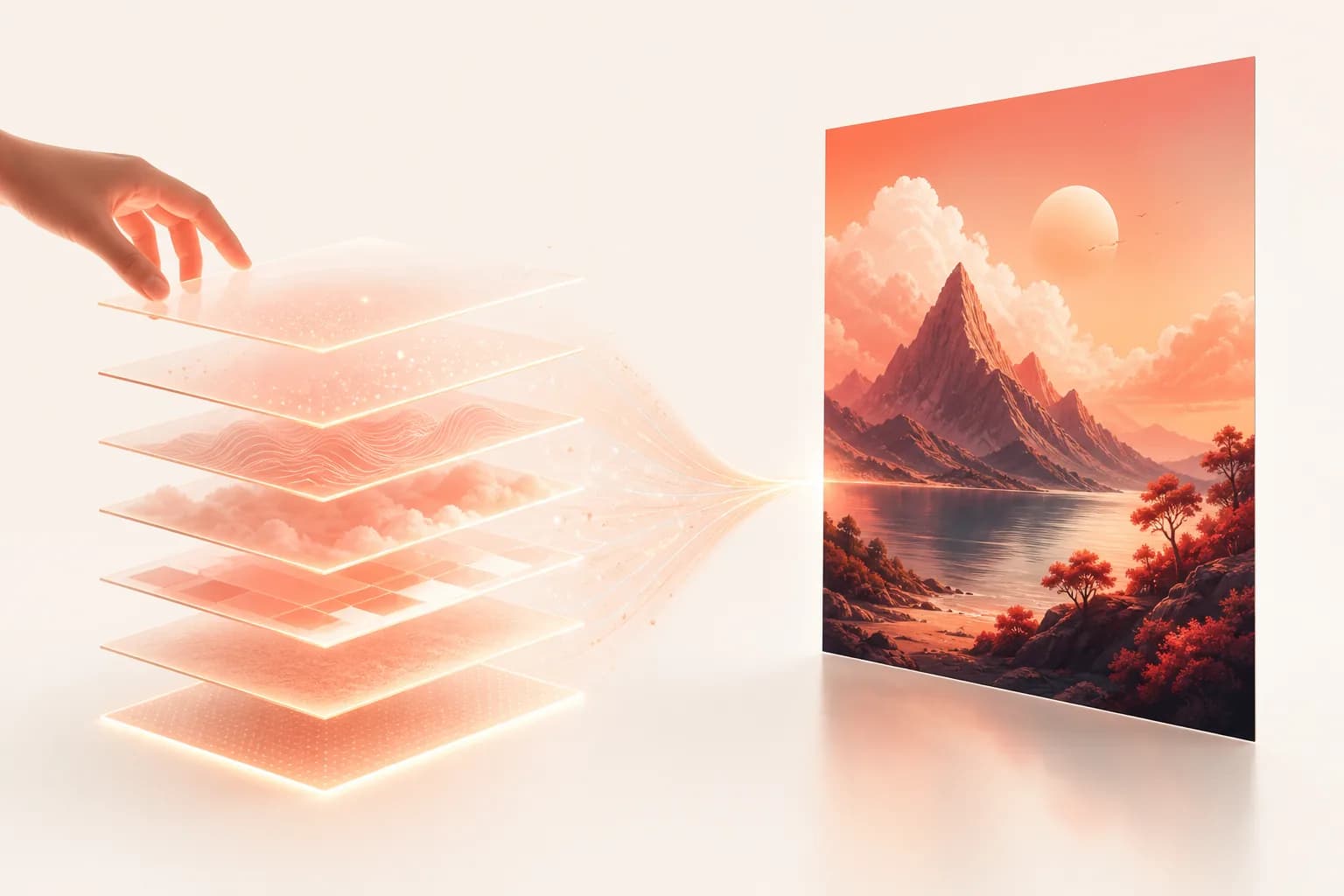
Lighting vocabulary is the fastest lever you have for changing the mood, genre, and quality of an AI-generated image without touching the subject. This reference guide covers the terms models reliably respond to across six categories: light source types, light quality, direction and angle, color temperature, named lighting setups, and cinematic lighting references. Each term includes a plain-language explanation and an example phrase you can drop directly into a Floniks AI Image or AI Video prompt.
Why lighting vocabulary matters more than most prompt words
Lighting is the layer of a prompt where a single word swap produces the most dramatic visual change. Swapping "harsh overhead fluorescent light" for "soft natural window light" on the same subject, in the same environment, with the same composition, produces images that feel like they belong to entirely different genres — institutional vs. intimate. This is because lighting encodes emotional and genre associations that viewers have absorbed over decades of photography, film, and painting. Models have learned these same associations from training data, which means lighting vocabulary has a very high signal-to-noise ratio: when you name a specific light source and quality, the model knows exactly what to do with it. In contrast, mood adjectives like "beautiful" or "dramatic" are ambiguous — dramatic lighting could mean horror-film chiaroscuro or stadium-concert spotlights. Name the light specifically, and the mood follows. The vocabulary below is organized into six categories so you can build lighting descriptions the same way a cinematographer or photographer thinks: source first, then quality, then direction, then color, then the named setup that combines them all.
Light source types
Natural sources:
- "Sunlight" — directional, varies from soft (overcast) to hard (midday clear sky)
- "Golden hour sunlight" — low-angle, warm amber, long soft shadows
- "Blue hour light" — post-sunset, cool blue ambient with reduced contrast
- "Overcast diffused daylight" — soft, even, shadowless, ideal for portraits
- "Candlelight" — very warm (1800–2000K), flickering, intimate, small radius
- "Firelight" — similar to candlelight but larger, more dramatic, red-orange
- "Moonlight" — cool blue-white, very dim, creates long desaturated shadows
Studio / Artificial sources:
- "Softbox" — large diffused source, soft shadows with gradual falloff
- "Beauty dish" — medium source, slightly harder than softbox, used for beauty and fashion
- "Ring light" — produces distinctive circular catchlights, flat frontal lighting, popular in beauty
- "LED panel" — versatile, can be colored or white, hard or soft depending on size/distance
- "Neon sign" — colored, hard-edged, high drama, often used in editorial or cyberpunk aesthetics
- "Practical light" — light sources that appear within the frame itself (a lamp, TV screen, phone screen)
Light quality and direction
Light quality describes the hardness or softness of shadows:
- "Hard light" or "direct light" — sharp-edged shadows, high contrast, typically from a small or distant source
- "Soft light" or "diffused light" — graduated shadow edges, lower contrast, from a large or diffused source
- "Dappled light" — broken, irregular light patches, as through leaves or a window blind
- "Filtered light" — light passed through a translucent material (frosted glass, sheer curtain)
Light direction describes the geometric relationship between light source and subject:
- "Front light" or "flat light" — even, minimal shadows, used in product photography and beauty
- "45-degree key light" — the standard portrait position, creates soft dimension with visible shadow side
- "Side light" or "split lighting" — light directly to one side, exactly half the face in shadow
- "Rembrandt lighting" — 45-degree angle with a triangular catch-light on the shadow cheek
- "Back light" or "rim light" — source behind subject, separates subject from background with a bright outline
- "Butterfly lighting" — source directly in front and above, creates a small shadow under the nose shaped like a butterfly
- "Overhead light" or "top light" — source directly above, creates dramatic under-eye shadows, harsh and unflattering unless softened
Color temperature and color of light
Color temperature profoundly affects the emotional reading of an image. Warm light reads as cozy, intimate, sunset, domestic; cool light reads as clinical, corporate, cold, nighttime, science. Naming color temperature in Kelvin is highly specific and models respond to it well.
Warm light (1800K–3500K):
- "Candlelight, 1800K, deep amber"
- "Warm tungsten, 2700K, incandescent glow"
- "Golden hour, 3000K, warm orange-gold"
Neutral/Daylight (4000K–5500K):
- "Natural daylight, 5000K, neutral and clean"
- "Studio daylight balanced, 5500K, true-color rendering"
Cool light (6000K–9000K):
- "Overcast daylight, 6500K, cool and flat"
- "Blue hour, 7000K–8000K, deep blue ambient"
- "Arctic daylight, 9000K, cold steel-blue"
Colored light (non-temperature):
- "Red-orange sodium streetlight glow"
- "Cyan-green neon light, high saturation"
- "Magenta club lighting"
- "Split toning: warm amber key light, cool blue fill light" — this combination is extremely popular in cinematic photography and the model reproduces it reliably.
Named lighting setups and their effects
These named setups are standard photography and film terms that models have seen extensively in training data, making them very high-signal vocabulary:
- "Rembrandt lighting" — warm, three-quarter portrait with a triangular shadow cheek highlight; evokes Old Master paintings; intimate and character-revealing
- "Chiaroscuro lighting" — extreme contrast, deep black shadows, single-source drama; cinematic and theatrical
- "Three-point lighting" — professional, balanced, key + fill + backlight; the standard for commercial photography and video
- "High-key lighting" — bright, flat, minimal shadow, clean and optimistic; used in advertising and comedy
- "Low-key lighting" — predominantly dark tones with selective illumination; dramatic, noir, suspenseful
- "Beauty lighting" — bright, flattering, minimal shadows under eyes, used in cosmetics and portrait photography
- "Hollywood lighting" — grand, sculpted, often with gelled lights and strong contrast; glamorous
- "Practical lighting" — all light sources are visible in-frame, realistic and documentary feel
- "Available light" or "ambient light only" — no supplemental lighting, naturalistic
- "Window light portrait" — soft, directional natural light from a nearby window, painterly and intimate
Cinematic and fine-art lighting references
Referencing specific cinematographers, directors, or photographers whose lighting style is distinctive can be a high-density shorthand — one name carries the associations of an entire visual vocabulary. These references work well in AI prompts:
- "Roger Deakins cinematography" — precise, controlled, classical compositions with deliberate warm-cool contrast
- "Vilmos Zsigmond style" — naturalistic, available-light feel, often used for period pieces
- "Rembrandt oil painting lighting" — as above, but framing it as painting rather than photography shifts the aesthetic
- "Caravaggio-style tenebrism" — near-total black background, single harsh light source on subject, extreme chiaroscuro
- "Edward Hopper lighting" — strong directional sunlight through windows, simultaneously isolating and geometric
- "Gordon Willis shadow photography" — "The Godfather" cinematographer, faces half in shadow, very low fill ratio
Use these references as modifiers alongside explicit technical descriptions rather than as standalone instructions: "Rembrandt-style lighting, single warm 3200K key light at 45 degrees to camera-left, very low fill, deep shadows on the camera-right side of the face" gives the model both the conceptual reference and the technical specification to execute it reliably.
FAQ
What lighting term produces the most dramatic single-word improvement to a portrait prompt?+
Adding "Rembrandt lighting" to a portrait prompt that previously had no lighting specification produces a consistent, dramatic improvement — it gives the model direction (45-degree key), a specific shadow pattern (triangular catchlight), and a warm, classical tone all in two words. For product photography, "three-point lighting" has a similar clarifying effect.
Can I combine multiple named lighting setups in one prompt?+
Combine them carefully — some combinations are contradictory (high-key and low-key are opposites). Stacking compatible setups works well: "Rembrandt lighting with a subtle hair light to separate the subject from the background" adds a third light to a standard two-light Rembrandt setup without conflict. When in doubt, describe the geometry explicitly rather than stacking named setups.
Does color temperature in AI prompts work the same as in real photography?+
Directionally yes — models have absorbed enough photography to know that "3000K warm golden" means amber-toned light and "7000K cool blue" means cold ambient. The exact Kelvin value is less important than the descriptive word alongside it. Always pair the Kelvin number with a color word: "warm 3200K amber" rather than "3200K" alone.
Related guides
Build it on Floniks
Image, video, digital humans, and reusable workflows on one canvas. No card required.
Explore Floniks