
Mood and Style Keywords: Steering Aesthetic Without Overloading a Prompt
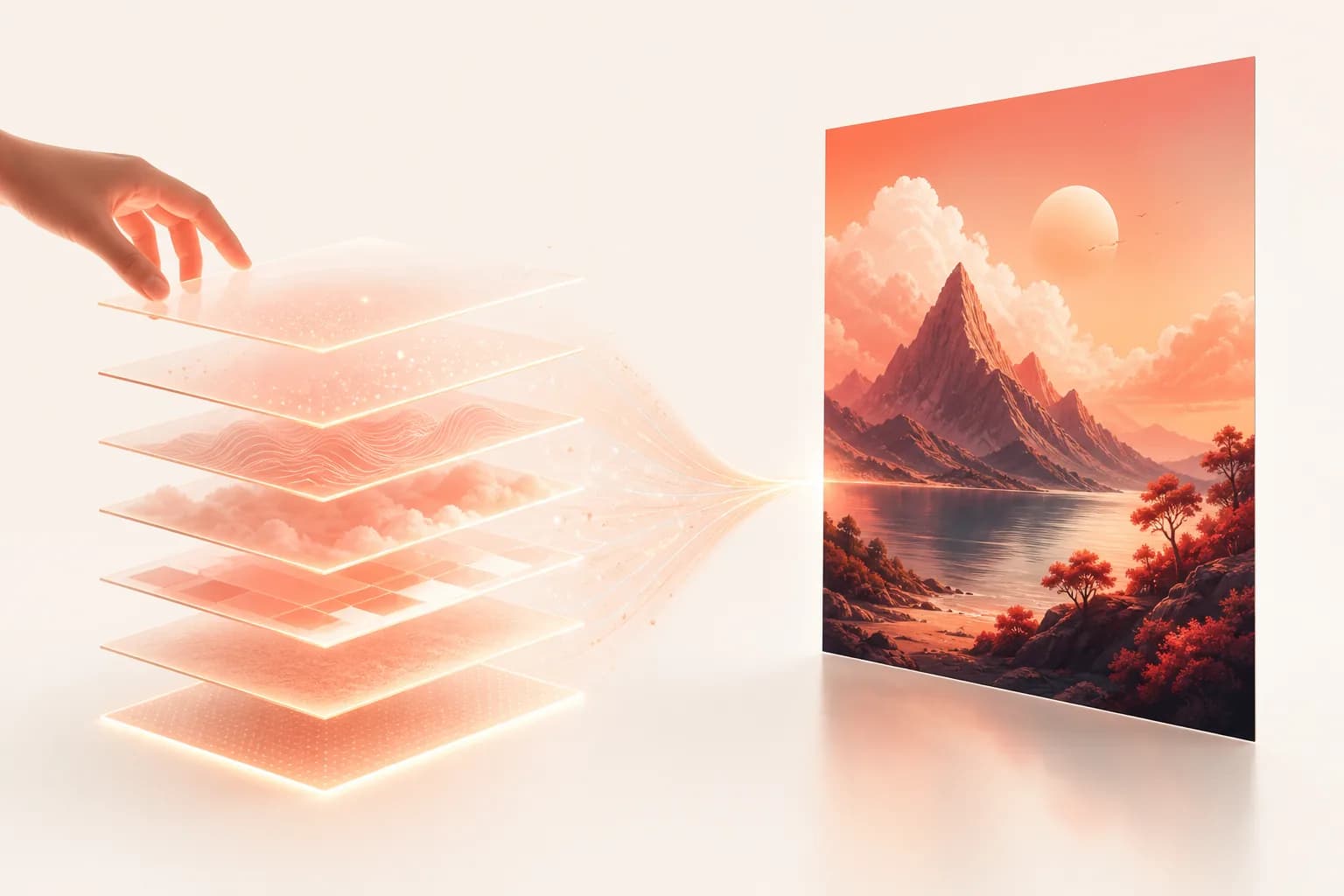
Mood and style keywords let you control the aesthetic register of an AI image without describing every visual element from scratch — a well-chosen reference like "golden-age Hollywood glamour" carries the lighting, wardrobe, contrast, and composition conventions of an entire era. The challenge is knowing which keywords actually move model output versus which ones are decorative noise. This guide maps the most reliable mood and style terms across genres — cinematic, editorial, fine-art, street, commercial — and teaches you how to weight them correctly so they direct rather than confuse.
The difference between mood and style
Mood and style are often treated as the same thing, but they operate on different axes and serve different functions in a prompt. Mood describes the emotional register of the image — what the viewer feels when they look at it: "melancholic," "euphoric," "unsettling," "serene." Mood is primarily achieved through lighting, color palette, and composition, so mood keywords work best when they are grounded in those physical specifics. Style describes the visual tradition the image draws from — the aesthetic language and the conventions of a medium, era, or genre: "mid-century modernist illustration," "1970s Kodachrome street photography," "contemporary A24 indie cinema." Style keywords carry implicit technical information: a "1970s Kodachrome" style implies warm color shifts, slight grain, slightly muted mid-tones, and a particular film-era look without you needing to specify each element. The most powerful prompts layer both: "a quiet, melancholic mood" (mood) + "in the style of late 1990s Japanese cinema, underexposed, washed-out greens" (style). Together they define both how the image feels and what visual language it speaks. Keep mood before style in your prompt so the model establishes the emotional goal first, then selects style conventions that serve it.
High-signal cinematic and film references
Cinematic style references are extremely high-signal in AI prompts because models have been trained on vast amounts of film stills, cinematography discussions, and color grading analysis. These references reliably steer output:
- "A24 film aesthetic" — soft, naturalistic light, earthy muted tones, intimate handheld feel, slight graininess
- "Neon noir" — wet streets, colored neon reflections, high contrast, deep shadows, urban night
- "Wes Anderson symmetrical" — centered compositions, pastel palettes, flat frontal lighting, quirky and precise
- "Terrence Malick golden hour" — backlit subjects, warm flares, naturalistic, poetic
- "1980s synth-wave retro" — purple and teal neon, retrofuturism, chrome, VHS texture overlay
- "Hong Kong cinema, Wong Kar-wai style" — blurred motion, saturated greens and reds, romantic and melancholic
- "Soviet-era documentary photography" — high contrast black and white, grain, reportage feel
- "Blade Runner 2049 cinematic" — vast scale, warm amber vs. cold blue contrast, fog and dust, sci-fi grandeur
Use these as style anchors, not as complete descriptions. Pair them with your subject, lighting, and composition to give the model a full brief.
Editorial, fashion, and commercial aesthetics
Editorial and commercial aesthetics carry very specific production-value signals that models recognize well. These are the terms professionals use in mood boards and creative briefs, which means models have encountered them in their original professional context during training:
- "Vogue editorial" — high fashion, bold, graphic, aspirational, often high-contrast
- "Harper’s Bazaar aesthetic" — elegant, sophisticated, clean, artistic sensibility
- "Sports Illustrated campaign" — active, athletic, sun-drenched, dynamic poses
- "Apple product photography" — white or gradient background, perfect soft-box lighting, hyper-sharp product detail
- "IKEA catalog" — lifestyle, lived-in interiors, natural light, Scandinavian neutral palette
- "Nike advertising photography" — high-energy, dramatic motion, strong graphic compositions
- "Luxury lifestyle campaign" — aspirational, warm and glowing, tasteful opulence
- "Direct-to-consumer product shot" — clean background, slight texture, lifestyle-adjacent
For Floniks users running product catalog workflows, picking one of these commercial aesthetic references and applying it consistently across a product-catalog workflow in /editor ensures every SKU feels like it belongs to the same brand campaign.
Fine-art and illustration style references
When you want an image that reads as illustration or fine art rather than photography, style keywords carry the entire visual burden — the model needs to know which tradition to draw from, because "illustration" alone is too broad to be useful. Effective fine-art and illustration references:
- "Oil painting, impressionist style" — visible brushwork, soft color blending, light-catching edges
- "Watercolor illustration" — transparent color washes, white paper showing through, soft blooming edges
- "Studio Ghibli animation style" — painterly backgrounds, warm color palette, detailed natural environments
- "Art Deco poster design" — geometric patterns, strong silhouettes, limited color palette, high contrast
- "Bauhaus graphic design" — primary colors, geometric shapes, minimalist composition
- "Risograph print" — limited color overlap, slightly misregistered ink, matte texture, retro-zine aesthetic
- "Pencil sketch with ink wash" — visible pencil lines, areas of wash tone, white space preserved
- "Digital matte painting, concept art" — photorealistic painted environments, often sci-fi or fantasy scale
For illustration work, pair the style reference with a brief subject description and let the style carry the rest. Over-specifying lighting and camera terms in illustration prompts creates a conflict between photographic and painterly conventions that often produces muddy results.
How to avoid overloading a prompt with mood keywords
The most common mood and style mistake is stacking too many competing references in a single prompt: "cinematic, dramatic, moody, ethereal, dreamy, high-contrast, pastel, soft, editorial, artistic, stunning." This creates conflicts — "high-contrast" and "soft" pull in opposite directions; "cinematic" and "dreamy" are compatible but both vague. The model averages the conflicting signals rather than resolving them, producing a generic, unfocused result. The rule: one style anchor, one mood modifier, one medium. "A24 film aesthetic (style), melancholic and quiet (mood), shot on 35mm film (medium)" — this triple is specific, internally consistent, and gives the model a clear creative direction. If you find yourself wanting more than three style/mood references, that usually means your subject and scene description is doing too little work. Strengthen the subject first. The second overloading mistake is using mood words that could describe any image: "beautiful," "stunning," "gorgeous," "epic," "magnificent." These words are decorative noise — they don’t change model output measurably because the model has no way to interpret them visually. Replace them with specific sensory details: "melancholic, quiet" instead of "beautiful"; "vast, overwhelming scale" instead of "epic."
Street and documentary aesthetics
Street and documentary aesthetics are defined by their relationship to reality — the goal is an image that looks found rather than made. This requires a different vocabulary from studio or editorial work.
- "Street photography, Vivian Maier style" — square crop, candid, black-and-white, mid-century New York or Chicago
- "Saul Leiter color street photography" — impressionistic, out-of-focus foreground elements, rich color, intimate scale
- "Documentary photography, reportage" — natural light, candid moments, grain, honest rather than flattering
- "Golden age photojournalism" — high contrast black and white, dramatic events, grain, decisive moment
- "Tokyo street photography" — neon-lit evenings, crowds, layered visual complexity, often shot with a wide lens
- "Magnum Photos aesthetic" — humanist, decisive moment, natural light, narrative weight
- "Instagram-era street portrait" — environmental portrait, shallow depth of field, subject is isolated from a busy background
To make a street or documentary aesthetic feel authentic in an AI image, add "candid," "unposed," "natural expression," and "available light only" to signal that the image should look unstaged. Pair with a grain or film stock reference to push the aesthetic further from digital perfection.
FAQ
How many style keywords should I include in one prompt?+
One anchor style reference plus one or two modifiers. More than three style keywords creates conflicts the model resolves by averaging, producing a generic result. Choose one high-signal reference that carries the most visual conventions, then modify it with one mood adjective and one medium or technical qualifier.
Do aesthetic references to specific directors or photographers always work?+
They work best for directors and photographers with a widely recognized and documented visual style — the more extensively analyzed and discussed their work is online, the more training data the model has absorbed. Obscure references to lesser-known artists may produce generic results. When uncertain, describe the visual characteristics directly instead of relying on the name alone.
Is "photorealistic" a useful style keyword?+
Somewhat, but "photorealistic" has become so common in prompts that its signal has weakened. More effective alternatives: "shot on full-frame DSLR," "35mm film photograph," "commercial studio photography," or "hyperrealistic, true-to-life detail." These carry the photorealism intent with more specificity.
Related guides
Build it on Floniks
Image, video, digital humans, and reusable workflows on one canvas. No card required.
Explore Floniks