
Choosing an Art Medium: Photo, 3D Render, Illustration, Painting
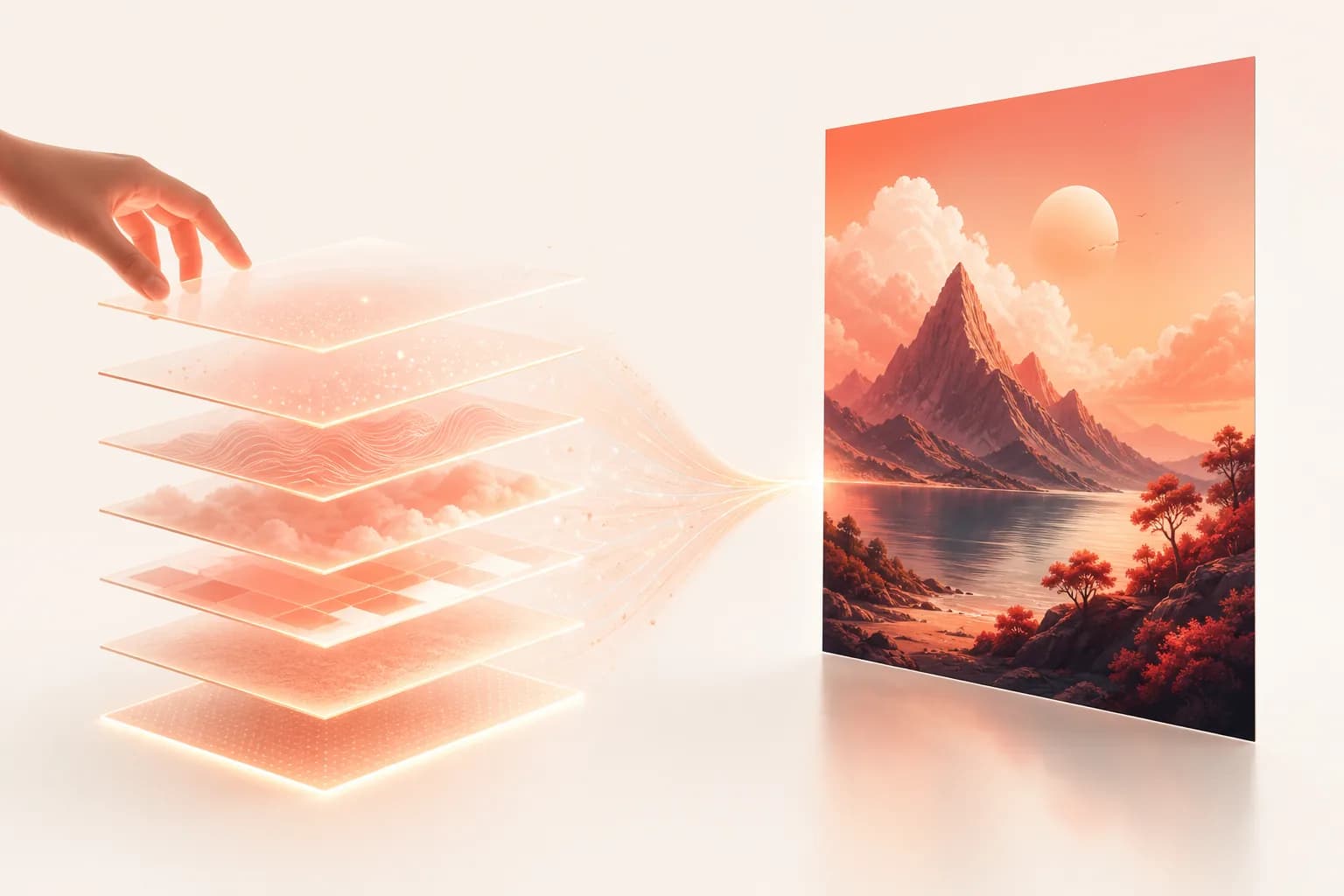
Selecting the right art medium and render style is the foundational creative decision that shapes every other aspect of an AI-generated image. Photography, 3D CGI render, digital illustration, oil painting, watercolor, and ink line art each carry distinct visual properties, cultural connotations, and platform fit. Choosing incorrectly means your prompt fights the model's defaults rather than working with them. This guide breaks down the major art medium categories, teaches you the specific vocabulary that activates each, explains how to blend mediums for hybrid aesthetics, and connects medium choice to practical use cases across social content, product work, and editorial creative on Floniks.
Why Medium Choice Is the First Creative Decision
Every other aesthetic decision — color palette, composition, lighting — reads differently depending on the declared medium. "Soft golden light" means something different in a photographic context (warm hour backlight, shallow depth of field, film grain) versus a watercolor context (wet-into-wet blooms, wet paper texture, pigment pooling) versus a 3D render context (radiosity simulation, subsurface scatter, global illumination). When you declare the medium early in your prompt, you activate a cluster of associated visual properties that the model has learned to deploy together, saving you from having to describe each property individually. Medium also determines platform fit: photography reads as credible and documentary, illustration reads as designed and intentional, 3D renders read as premium or technical.
Photography and Hyperrealism
Photographic realism is the default register for most image generation models and generally produces the most convincing results for portrait, lifestyle, and product work. Activate it explicitly: "photorealistic," "DSLR photograph," "shot on 35mm film," "commercial photography." Adding camera model references can help: "Canon EOS R5 full-frame" implies a certain depth of field and color science. Lens focal length cues carry compositional meaning: "85mm portrait lens" implies compressed perspective and background separation; "24mm wide angle" implies environmental context and slight edge distortion. Film stock references unlock a rich palette vocabulary: "Kodak Portra 400 color rendering," "Fuji Velvia saturation," "black and white Ilford Delta 3200 grain." Hyperrealism beyond photography adds "8K ultra-detailed" and "photoscanned texture" for visual richness that exceeds documentary realism.
3D Render and CGI Aesthetics
3D CGI render styles cover a wide spectrum from photorealistic to clearly synthetic, and each segment of that spectrum has distinct prompt vocabulary. Photorealistic 3D: "Unreal Engine 5 Lumen global illumination," "Octane render," "V-Ray architectural visualization," "product render on white cyclorama." Stylized 3D: "Pixar animation style," "Blender Eevee low-poly," "3D cartoon character," "Studio Ghibli-inspired 3D." Technical and product 3D: "CAD visualization," "exploded view diagram," "cross-section render," "wireframe overlay." 3D render vocabulary works especially well for product imagery, architectural visualization, and character design where the synthetic quality is a feature rather than a limitation. The clean, controlled lighting of studio 3D renders makes this medium ideal for e-commerce imagery where consistency and precision matter more than warmth.
Illustration and Graphic Styles
Illustration encompasses an enormous range — from flat vector icon design to richly detailed editorial illustration — and the vocabulary that activates each is specific. Flat design: "flat vector illustration," "icon design style," "minimal flat color," "no gradients." Editorial illustration: "New Yorker cover illustration style," "editorial ink and watercolor," "hatching crosshatch detail." Children's book: "soft gouache children's book illustration," "whimsical illustration," "round character design." Comic book: "Marvel Comics panel style," "bold ink outline," "Ben-Day dot shading," "dynamic action pose." Anime and manga: "anime key visual," "manga screen tone," "Studio Trigger style," "shojo illustration." Each of these categories has associated color palette, linework character, and lighting convention that the model activates together when you use the right vocabulary.
Traditional Painting Mediums
Traditional painting medium vocabulary is one of the richest domains in AI image generation and produces some of the most visually compelling results. Oil painting: "Old Master oil painting," "sfumato technique," "impasto texture," "glazing layers," "chiaroscuro." Watercolor: "loose wet-on-wet watercolor," "blooming pigment edges," "white paper showing through," "aquarelle." Gouache: "opaque gouache illustration," "flat matte color fields," "graphic gouache." Acrylic: "palette knife acrylic texture," "bold gestural brushwork," "acrylic color field painting." Gouache and watercolor are particularly popular for social media illustrated content and children's content because their softness and warmth feel human and handmade. Oil painting language activates high-prestige cultural associations that work well for portraiture, brand storytelling, and artistic content.
Blending Mediums for Hybrid Aesthetics
Some of the most distinctive contemporary aesthetics are deliberately hybrid: photographic realism combined with painterly color grading, 3D renders with hand-drawn line overlays, digital illustration with film grain and photographic depth of field. Prompting hybrids requires naming both mediums explicitly and using a bridging technique descriptor: "photorealistic portrait with impressionist oil painting color treatment," "3D character render with cel-shading anime outlines," "studio photograph with watercolor texture overlay." The model does not always execute hybrid requests cleanly — sometimes one medium dominates — so iterating with different weightings of each medium descriptor is necessary. In Floniks, the style transfer workflow at /editor is specifically designed for applying a secondary medium's style onto a base generation from a different medium, making medium blending more controllable than single-call prompting alone.
Matching Medium to Platform and Use Case
Different platforms and use cases have different optimal medium choices. E-commerce product photography needs photorealistic or clean 3D render. Instagram lifestyle content performs best with warm photographic or editorial illustration aesthetics. YouTube thumbnail design benefits from high-contrast digital illustration or photorealistic composite. Children's educational content suits gouache or watercolor illustration. B2B SaaS marketing prefers clean 3D data visualization and icon design. Identifying the platform expectation before choosing your medium prevents the most common aesthetic mismatches. In Floniks, each major use case has a playbook template in the /editor library that pre-selects the appropriate medium and provides a starting prompt structure tuned for that platform's visual conventions — use these as your starting point and customize from there.
FAQ
How do I make an AI image look like a specific famous painter's style?+
Name the painter and add style-specific vocabulary: "in the style of Vermeer, soft window light, pearl earring palette" or "Basquiat neo-expressionist, gestural brushwork, text fragments, bold palette." Adding technique and period descriptors increases specificity beyond just the name.
Can I switch between mediums in the same workflow on Floniks?+
Yes. You can generate a base image in one medium and apply a style transfer node to render it in a different medium. This is more controllable than trying to specify two mediums simultaneously in a single prompt.
Why does specifying a 3D render style sometimes make images look worse?+
Some models are primarily trained on photographic data and handle 3D render vocabulary less precisely. In those cases, try more specific render engine terms like "Octane render" or "Unreal Engine 5" instead of generic "3D render," or switch to a model tagged for 3D output in the Floniks model selector.
Related guides
Build it on Floniks
Image, video, digital humans, and reusable workflows on one canvas. No card required.
Explore Floniks