
Prompting Fantasy and Sci-Fi Worlds
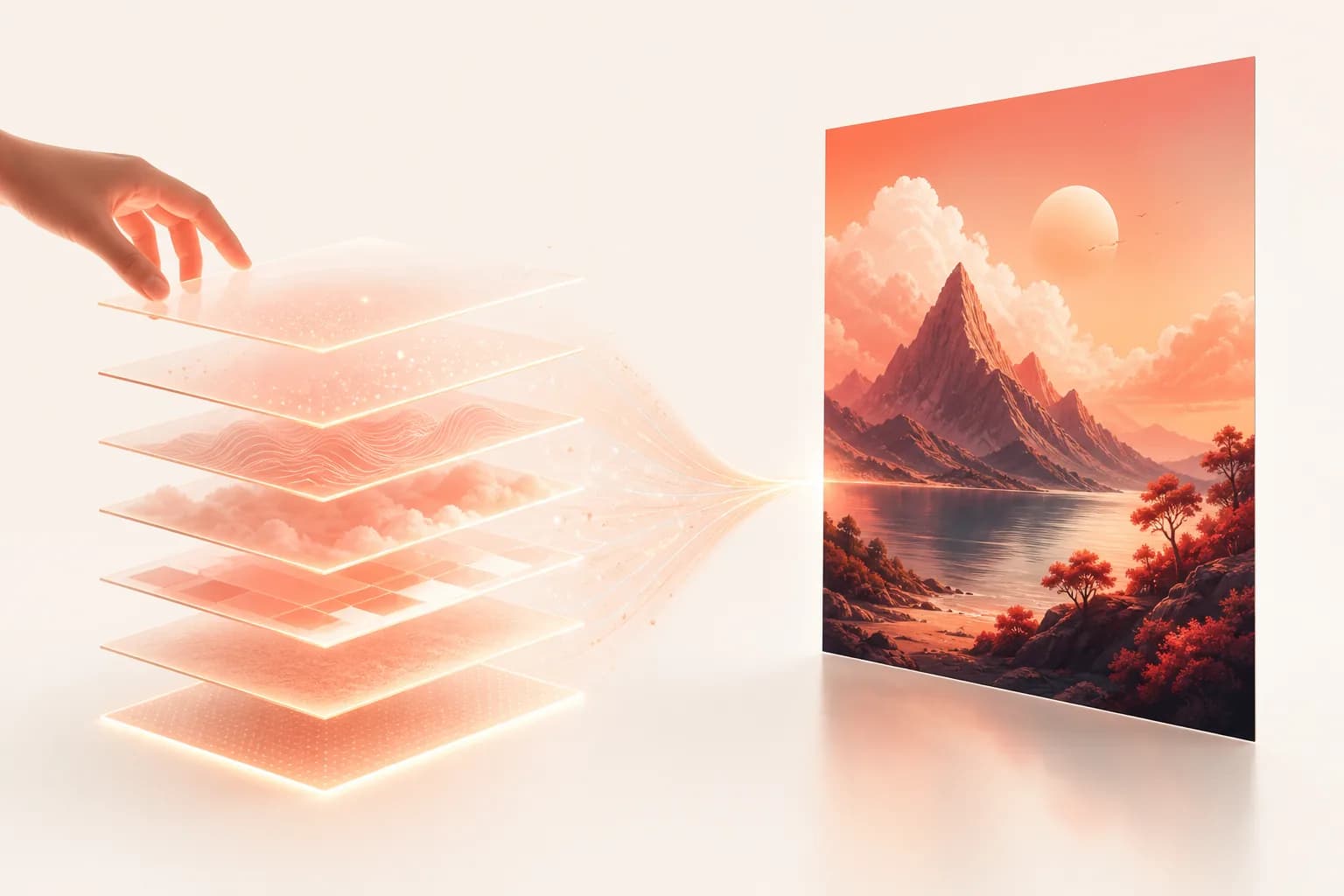
Fantasy and science fiction worldbuilding through AI image generation is one of the most creatively expansive applications available — and one of the most technically demanding to execute consistently. The challenge is building a fictional world with internal logic: architecture that implies a civilization, technology that implies a physics, magic systems that manifest visually, creatures that feel like they evolved rather than were assembled from random parts. This guide covers the specific prompt vocabulary for fantasy landscapes, creature design, sci-fi environments, character costuming, and world-coherence techniques that distinguish genuine concept art from a jumble of impressive but incoherent fantasy imagery.
Building Internal World Logic in Your Prompt
The difference between compelling fantasy concept art and a random collection of fantasy imagery is internal consistency — the sense that everything in the image belongs to the same world and implies the same civilization, ecology, or physics. When you describe a fantasy fortress, every material choice, architectural feature, and decorative element should imply something about the people who built it: their technology level, their relationship with magic, their values, their climate, their resources. A dwarf fortress implies stone mastery, functional over decorative, low ceilings, rune carving, torch light; an elf citadel implies organic forms, natural materials integrated with living wood, high ceilings and light, astronomical orientation. The single most powerful technique for achieving internal world logic is to decide the world's core tension before you start prompting. What is the central conflict between forces? What does that manifest as visually? In a world where organic magic and industrial technology are at war, you might write: 'industrial steam-punk mining complex encroaching on ancient forest, sharp angular steel against soft organic wood and moss, chimneys fouling clear air, visual tension between mechanical and natural systems.' Every element in the image should serve the thematic tension. This approach produces images where every viewer immediately understands the world's story without needing text explanation.
Fantasy Environment and Landscape Vocabulary
Fantasy landscapes require the same layered composition vocabulary as real landscapes (foreground, midground, background; atmospheric depth; geological plausibility) but with an added layer of world-defining difference from reality. The most effective fantasy landscape prompts are those that specify exactly one or two core departures from reality while keeping all other environmental variables grounded. 'Ancient petrified forest where every tree has turned to crystalline violet stone, frost-covered root systems emerging from snow, distant mountains visible through sparse crystal trunks, cold blue winter light, silent and timeless quality' is effective because only the trees are fantastical — the snow, mountains, winter light, and frost are grounded and real, making the crystal trees land harder. When everything is fantastical simultaneously (floating mountains and purple sky and glowing ground and mist dragons) the result is visual noise without clear narrative. Environment type vocabulary that produces reliable results: cursed swamp — dark brackish water, twisted mangrove forms, bioluminescent fungi, oppressive mist; celestial palace — architecture built in clouds, translucent walls catching light from below, impossible scale, white and gold; volcanic demon realm — basalt architecture, rivers of magma providing the only light, sulfurous atmosphere, heat-shimmer air; primordial ocean floor — enormous ancient coral structures, filtered surface light from far above, sea creatures implying scale, sediment drifting like snow.
Creature and Monster Design Logic
The most believable AI-generated creatures feel like they evolved rather than were assembled from parts. The key prompt technique for believable creature design is to specify the evolutionary pressures that shaped the creature before describing its appearance. What does it eat? Where does it live? What is it afraid of? What does it use for defense? The answers to these questions should drive the visual design. A creature that hunts in complete darkness underground needs: no eyes (or vestigial), extremely enlarged ears or acoustic sensory organs, pale or transparent skin, powerful gripping claws for climbing cave surfaces, elongated limbs for reaching. Describing the ecological niche before the visual features forces internal biological logic: 'deep cave predator with no functional eyes, enormous membrane ears oriented forward, translucent skin showing visible circulatory system, long articulated fingers ending in adhesive pads for cave ceiling navigation, bioluminescent lure at the tip of a dorsal protrusion.' This is far more believable than 'scary cave monster with big claws' because the design implies function. For large fantasy creatures — dragons, kaiju, giants — scale and weight are the primary prompting challenge. AI models often render large creatures without the visual gravity that implies real mass. Add: 'enormous scale emphasized by comparison with surrounding trees and mountains, visible weight and mass, ground-level dust displacement suggesting heavy footfall, structural anatomy implying the engineering required to support this size.'
Sci-Fi Architecture and Technology Aesthetics
Science fiction has several distinct technology aesthetics that imply different civilizational values, which AI models have absorbed deeply from decades of concept art and film production design. Clean minimalist near-future tech: 'near-future corporate space station interior, all-white surfaces with embedded LED lighting, minimal visible hardware, holographic interfaces, everything slightly too clean and controlled, cold and corporate.' Lived-in space opera: 'exterior of a well-traveled freighter, hull plating showing decades of repair patches, improvised antenna arrays, mismatched paint from different owners, mechanical external loading equipment, cargo manifest stenciled on panels.' Biopunk and organic tech: 'biological technology interface, grown rather than manufactured, organic curves and membrane surfaces, veins and nutrient channels visible through semi-transparent skin-like casing, warm and slightly unsettling, crossing the line between machine and organism.' Solarpunk utopia: 'solar-powered community megastructure, every surface covered in living plants and food gardens, curved sustainable architecture, mixed community of people, natural light flooding through vast transparent roof, warmly social atmosphere.' Military or industrial sci-fi: 'heavy military space station, brutalist engineering, exposed structural members, blast-proof bulkheads, emergency lighting, functional at the expense of comfort.' Naming the technology aesthetic with its implied value system produces far more coherent results than simply adding 'futuristic' to a description. 'Futuristic' is meaningless without specifying which vision of the future.
Fantasy Character Costuming and Equipment
Character costume and equipment in fantasy and sci-fi art are world-building instruments. The materials, construction methods, and decoration of a character's gear imply their civilization, class, role, and history. Fantasy armor design should specify: the base material, its magical or elemental properties if any, the construction technique, the condition (new vs. battle-worn), and the decorative tradition. 'Heavy plate armor forged from dark volcanic iron, dull matte black surface showing age, engraved with serpent motifs filled with faded gold inlay, one pauldron cracked from a past battle, repaired with crude iron staples that suggest field repair, sigil of a dissolved empire barely visible on the breastplate.' The last detail — the sigil of a dissolved empire — creates narrative depth without requiring any text explanation. Equipment tells stories. Mage characters: 'deep midnight blue robes with astronomical constellation patterns in silver thread, hood down, carrying an aged wooden staff topped with a cracked crystal sphere held together with copper wire, grimoire tucked under one arm, practical scholar's boots visible below the robes.' Rogue or assassin: 'close-fitting dark leather armor, deliberately unadorned and non-reflective, multiple functional pockets and sheaths visible at belt and thigh, no insignia, light footwear for silence, hood with vented eye panel for face concealment.' For sci-fi character gear, specify the purpose and the technological sophistication level: 'heavy scout armor, modular ceramic composite panels over an inner mesh suit, integrated environmental sensors on the helmet, worn and field-modified, manufacturer decals mostly removed by the user.'
Concept Art Style and Rendering Quality
Fantasy and sci-fi AI generation sits at the intersection of fine art illustration and production concept art. Specifying the rendering style anchors everything from the texture treatment to the color palette to the level of detail. Professional production concept art for films and games has specific quality markers: clean silhouette reading, value structure visible in greyscale, plausible material rendering, a clear focal hierarchy that tells the eye where to look first. To prompt for concept art quality: 'production concept art quality, clear silhouette, strong value structure, focal hierarchy with the character sharp and environment slightly softer, rendered in a style consistent with major fantasy film production design.' Digital oil painting style: 'digital oil painting, visible brushstroke texture, rich color saturation, chiaroscuro lighting with deep shadow and bright highlight zones, painterly quality reminiscent of Renaissance history painting applied to fantasy subject matter.' Matte painting environment: 'photographic-quality matte painting, indistinguishable from a real environment except for the fantastical elements, used in feature film production, every material texturally accurate.' Illustrated style for book covers or games: 'detailed fantasy illustration, clean ink line work under digital color, mid-century adventure book illustration influence, dramatic composition with hero figure in foreground and vast environment receding behind.' The rendering style choice should match the intended application: concept exploration benefits from looser painterly work; final production assets require photorealistic or highly polished digital illustration.
Step by step
- 1
Decide the world's core tension before describing any visual element
Before writing a single visual descriptor, state the central thematic tension of the world in one sentence. Every visual choice — materials, architecture, lighting, creature design — should serve and reinforce that tension. This produces world-coherent images rather than impressive-but-random fantasy collages.
- 2
Limit departures from reality to one or two per image
Ground your fantasy environments in real-world ecological and architectural logic and introduce only one or two fantastical departures. A real mountain range with crystalline purple trees is more visually striking and believable than a scene where everything simultaneously defies physics.
- 3
Describe creature ecology before creature anatomy
For creature design, begin with the evolutionary pressures — habitat, diet, predators, defense mechanisms — and let the anatomical description follow logically. This produces creatures that feel evolved rather than assembled, dramatically improving biological believability.
FAQ
How do I maintain consistent world design across multiple images in a campaign or game project?+
Use Floniks' workflow editor to build a world bible prefix node that contains your civilization's material palette, technology level, architectural style, and color temperature. Attach this prefix to every generation in your project. The shared prefix acts as a visual constitution that keeps all outputs in the same world regardless of the specific scene being generated.
Why do large fantasy creatures like dragons look small in my AI-generated images?+
Without explicit scale references, the model cannot communicate size. Add scale anchors: 'the creature's foot the size of a house, human figures visible at knee height for scale, ground-level perspective looking up, dust cloud from its movement visible.' Multiple converging scale cues force the model to render the creature as genuinely enormous.
What is the best rendering style for game concept art vs. book cover illustration?+
Game concept art typically needs clean silhouettes, strong value structure, and modular readability for production use — prompt for 'production concept art, clear silhouette, greyscale readable value structure, material accuracy.' Book cover illustration often benefits from a more painterly and dramatic style: 'detailed fantasy oil painting illustration, chiaroscuro lighting, dynamic composition, finished illustration quality suitable for commercial publication.'
Related guides
Build it on Floniks
Image, video, digital humans, and reusable workflows on one canvas. No card required.
Explore Floniks